How do you light your living room well?
General light, reading light, highlights: the three-layer method for a living room that is warm, practical and adjustable to suit the moment.
In this article
Think in three layers of light
A successful living room never relies on a single ceiling light. You combine three layers, which you switch on separately depending on the moment:
- General light, soft and even, for moving around and entertaining.
- Task light, stronger and localised, for reading, playing or working.
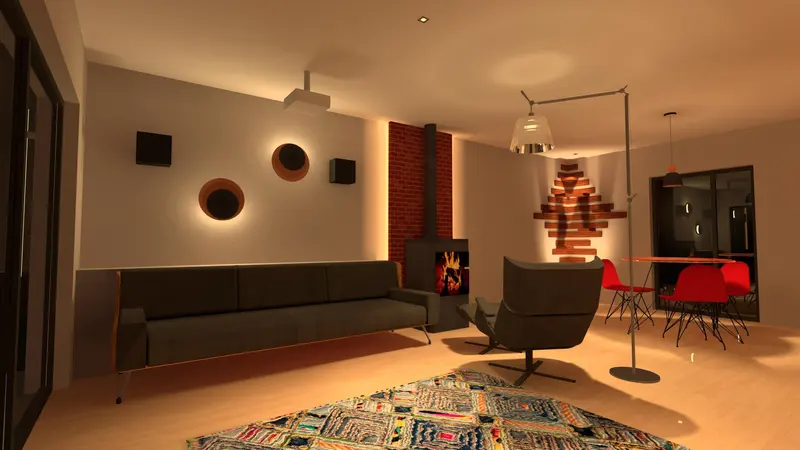
- Accent and decorative light, which highlights a wall, a painting, a niche or a bookcase.
In the evening, switch off the general light and keep only the accents and a lamp: the living room becomes intimate without being dark.
Soft general light, coming from the edges
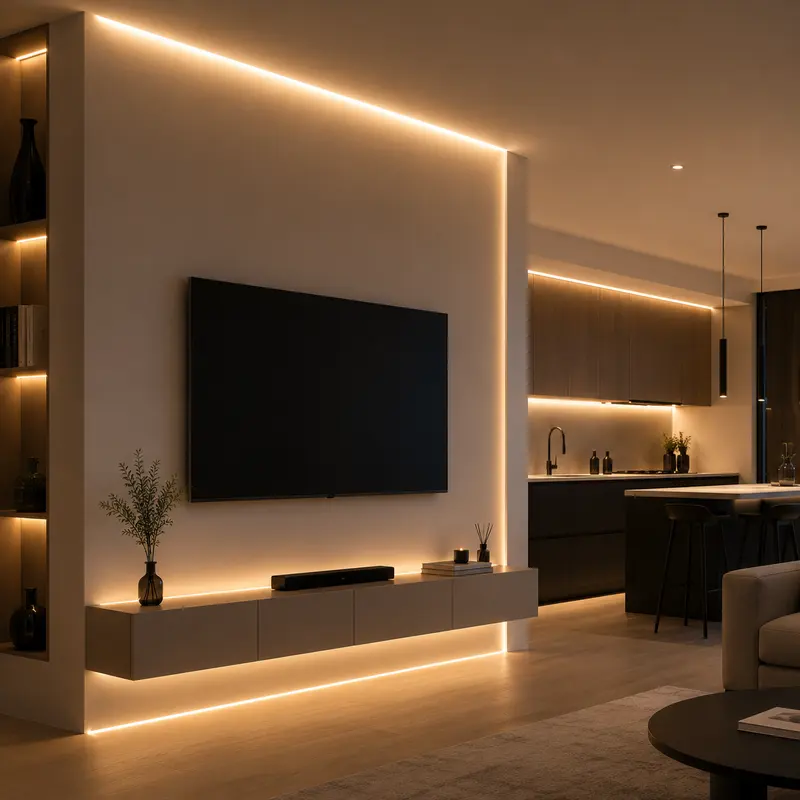
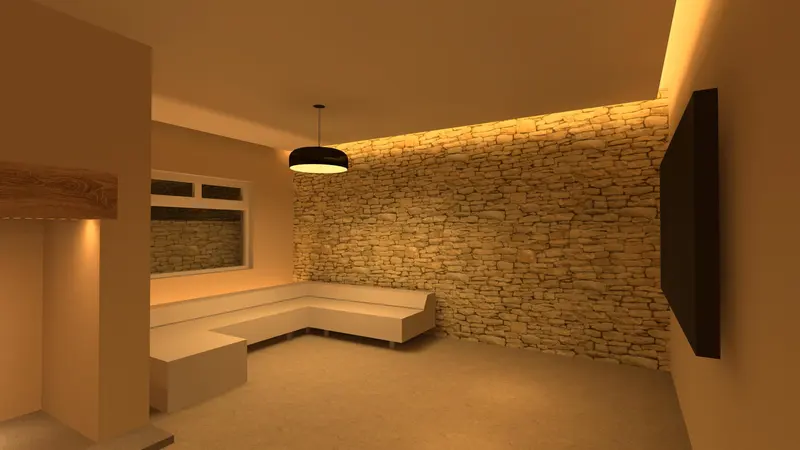
Rather than a grid of spotlights in the middle of the ceiling, light the walls: spotlights placed around the edges, 40–60 cm from the walls, or an LED strip in a cove that bounces the light onto the ceiling. A room with lit walls feels larger and more welcoming.
Choose a warm light, between 2700 K and 3000 K, and a colour rendering index (CRI) of at least 90: fabrics, wood and skin keep their true colours.
Proper light for reading
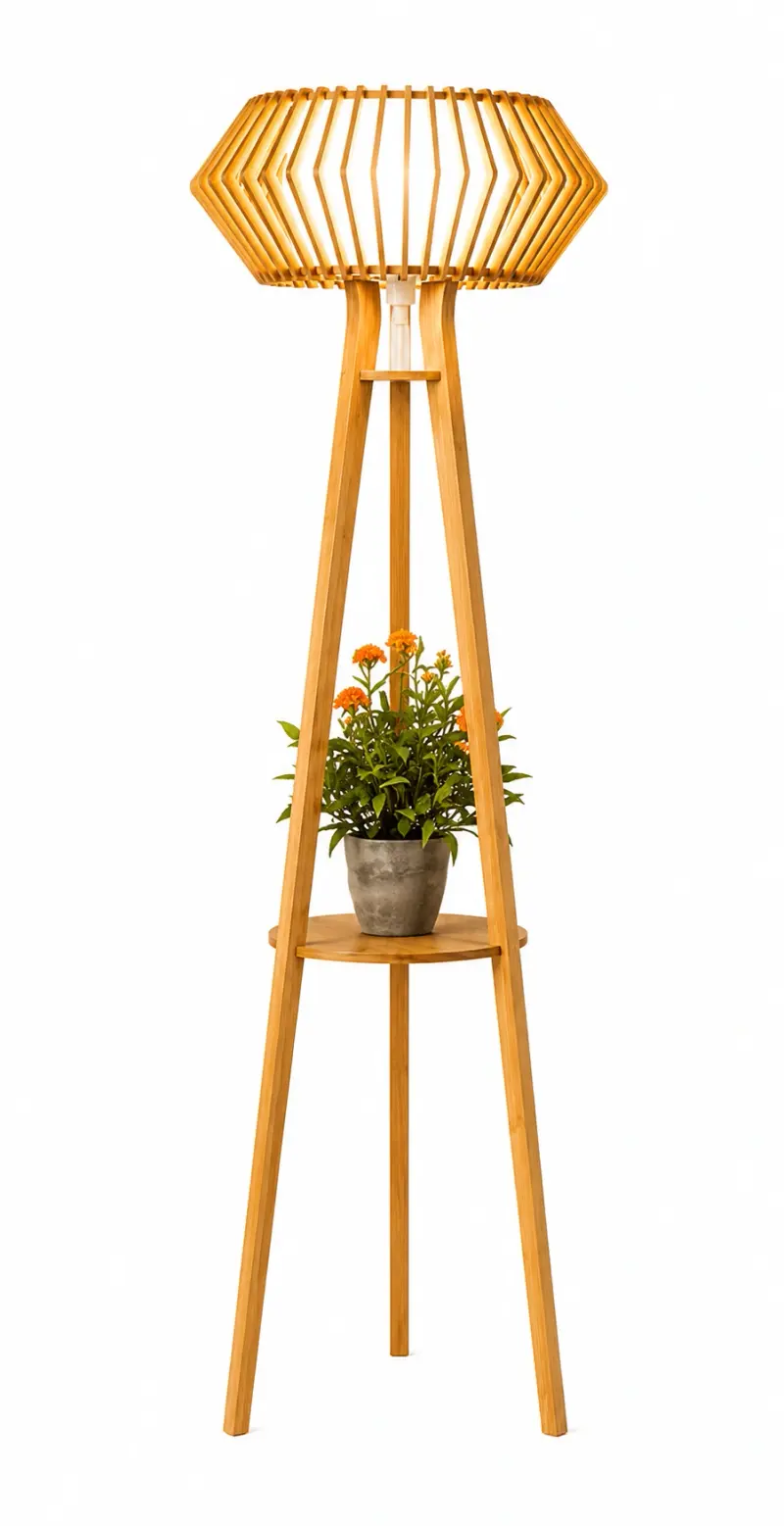
Next to the sofa or the reading armchair, place a floor lamp or an adjustable reading wall light. The light should come over your shoulder, slightly from behind, to light the book without glare. For comfortable reading, aim for about 300–500 lux on the page, far more than the ambient light of the living room.
Highlight what you love
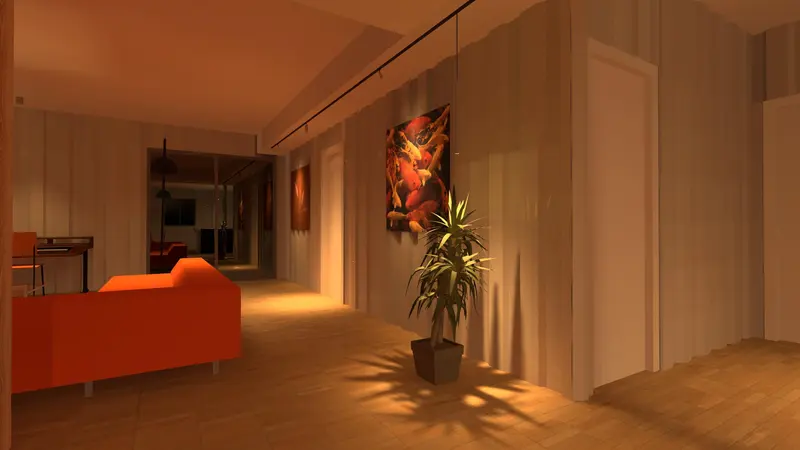
- A painting: an adjustable spotlight with a narrow beam (24°–36°), aimed at about 30° from the vertical to avoid reflections.
- A textured wall (stone, tadelakt, zellige, wood): grazing light, with spotlights placed very close to the wall.
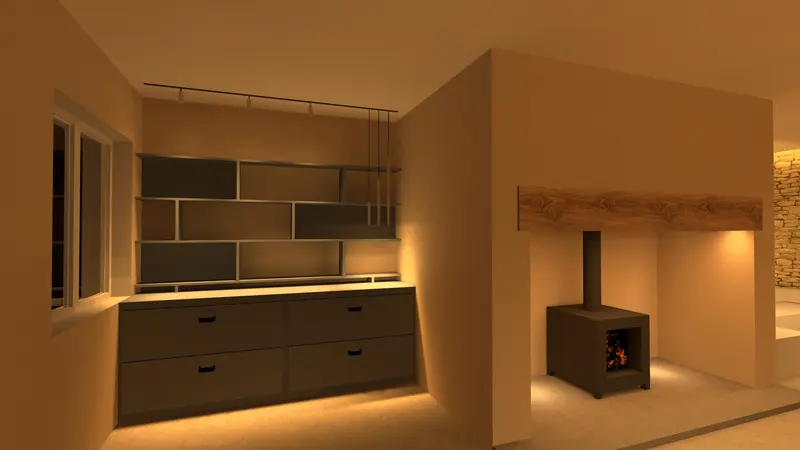
- A niche or a bookcase: an LED strip in a profile, hidden under each shelf.
- A decorative piece: a beautiful pendant above the coffee table or the dining table, which becomes the focal point of the room.
Above a table, hang the pendant about 70–80 cm above the tabletop. Elsewhere in the living room, leave at least 2.10 m of clearance under the light.
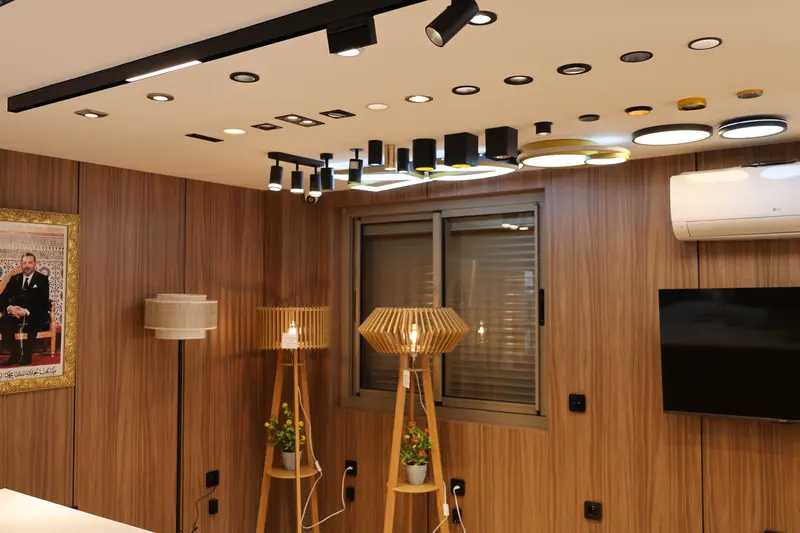
Several circuits and a dimmer
Plan at least two or three circuits: general light, accents, lamps. A dimmer (with compatible LEDs) lets you go from bright light for entertaining to a soft, dimmed mood for a film. With smart lighting, you save scenes and recall them with a single touch.
| Moment | What is switched on | Effect |
|---|---|---|
| Entertaining | General light + accents | Bright, welcoming |
| Reading | Floor lamp + accents at half intensity | Comfortable, focused |
| Film, evening | Accents and LED strip, dimmed | Intimate, no reflections on the screen |
Common mistakes
- A single strong source on the ceiling: flat and glaring.
- Spotlights lined up down the middle of the room: the centre is lit, the walls stay dark.
- Light that is too cold (4000 K and above) in a space for relaxing.
- Bare bulbs in your line of sight from the sofa.
- A single switch for everything: no way to change the mood.
Products in this article
Open a product page for the details and the price, or add it to your cart. Delivery anywhere in Morocco.
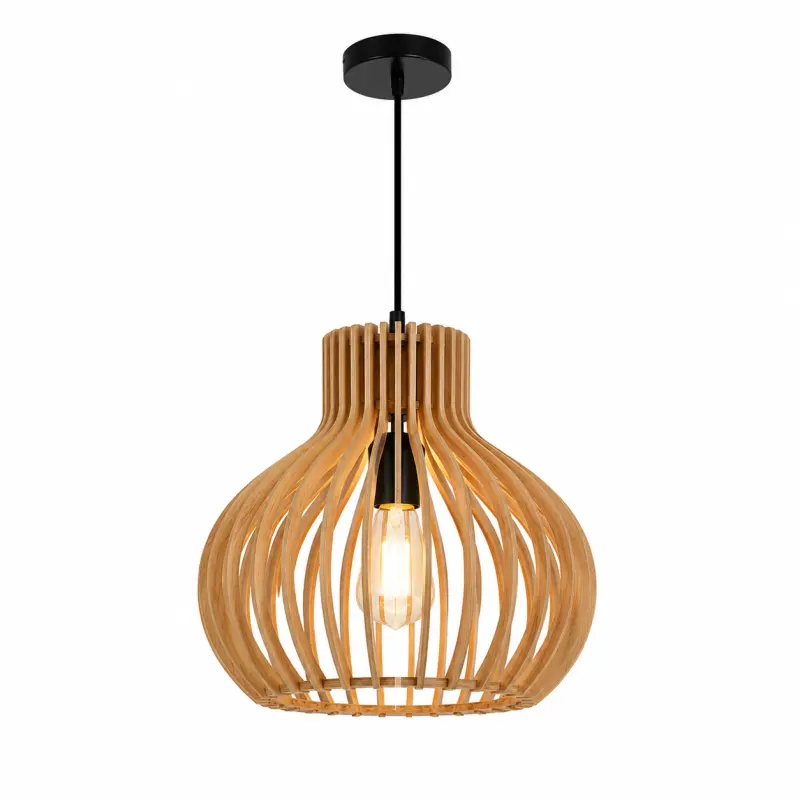
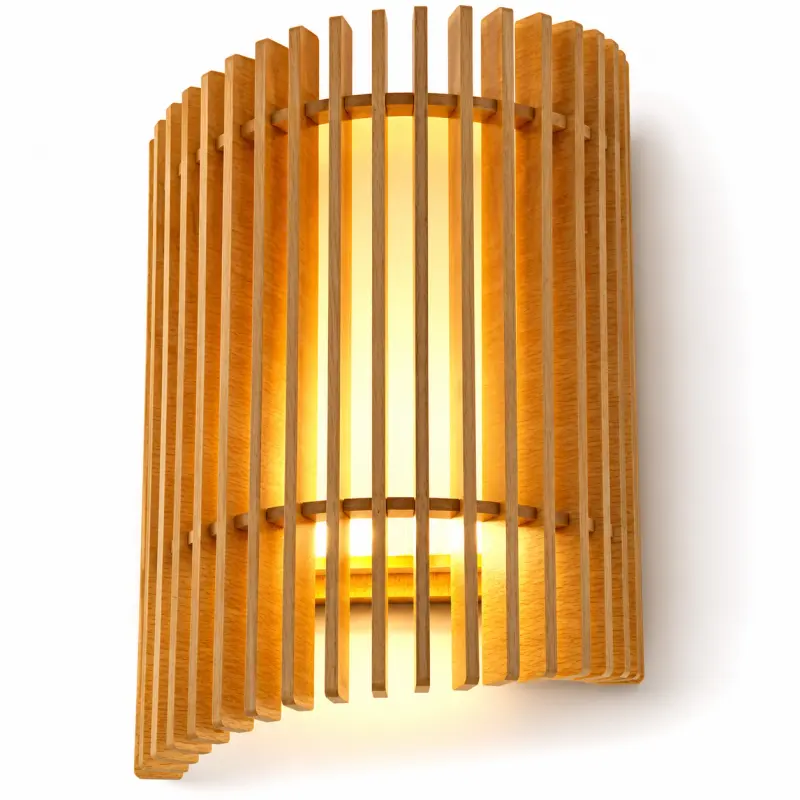
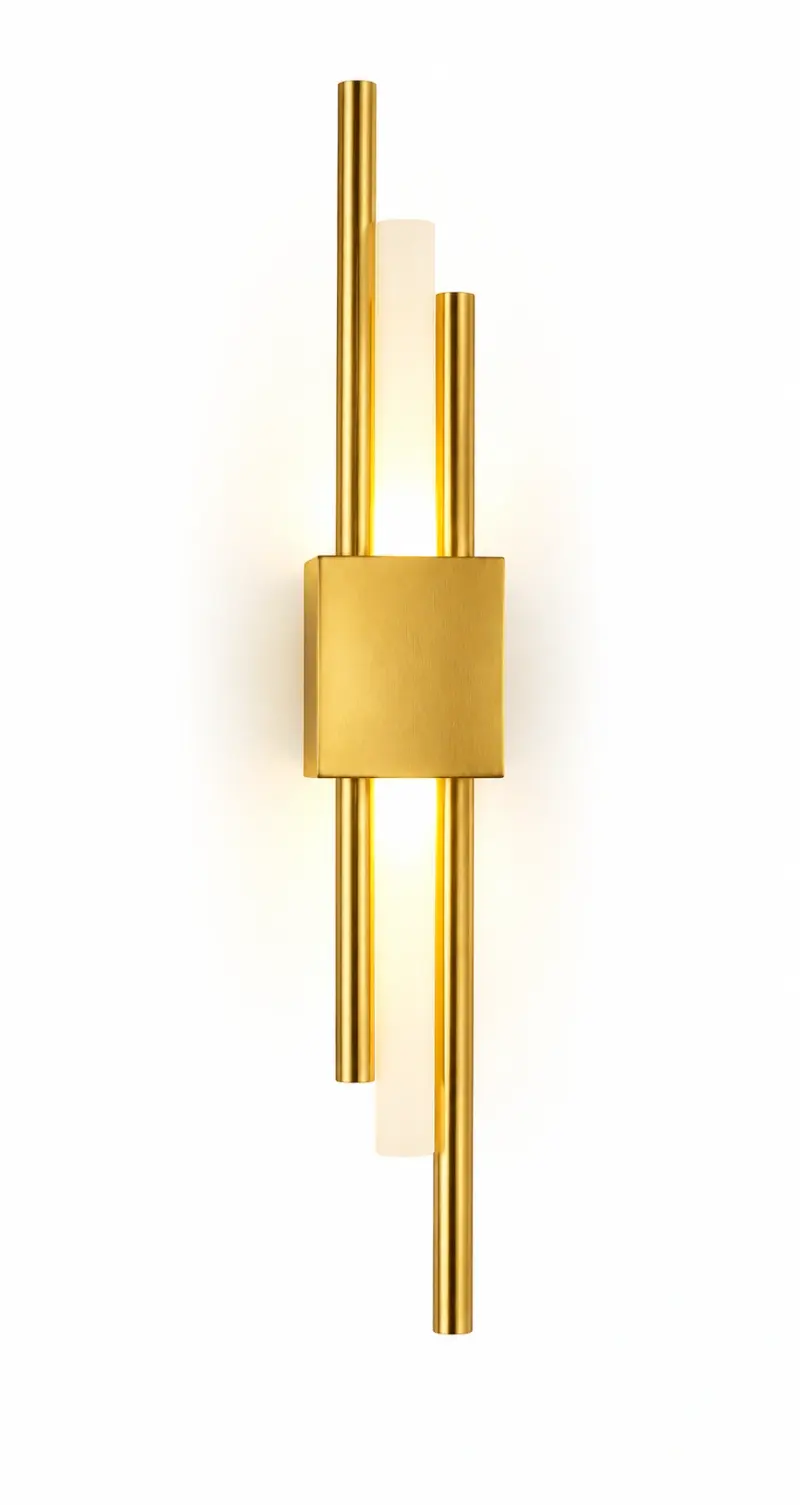
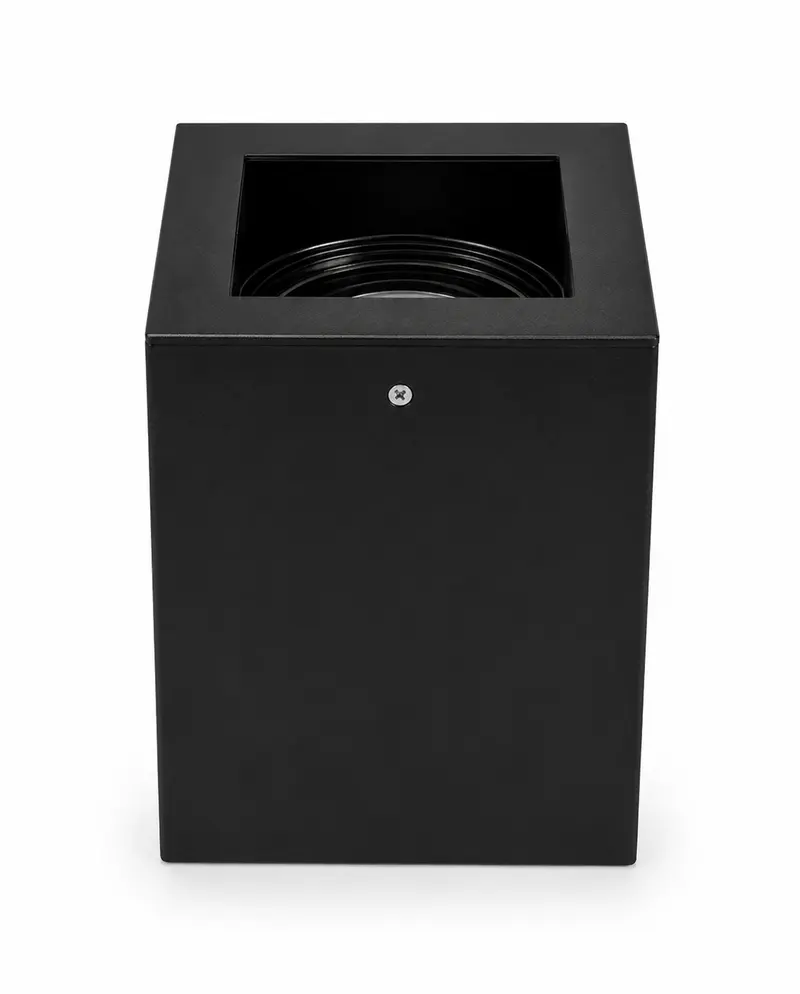
See the full range: Floor lampsPendant lightsIndoor wall lightsLED strips
Frequently asked questions
How many light sources does a living room need?
Allow at least three sources at different heights: general light (spotlights or a cove), a reading lamp, and one or two accents (wall light, LED strip, spotlight on a painting).
How high should a pendant hang above a table?
About 70–80 cm above the tabletop: the light falls on the table without blocking the view between guests.
What colour temperature for a living room?
Between 2700 K and 3000 K. 2700 K is more intimate, 3000 K a little crisper and more modern.