Colour temperature: 2700K, 3000K or 4000K?
Understanding kelvins and CRI to choose the right light room by room, avoid mismatched mixes and make the most of LEDs with adjustable colour temperature.

In this article
Kelvins in plain terms
Colour temperature is expressed in kelvins (K). The lower the number, the warmer the light (yellow, orange); the higher it is, the whiter the light becomes, and then bluish.
| Temperature | Appearance | What it suggests |
|---|---|---|
| 1800–2200 K | Amber | Candlelight, sunset |
| 2700 K | Very warm white | The old filament bulb |
| 3000 K | Warm white | Welcoming but crisper |
| 4000 K | Neutral white | Clear working light |
| 5000–6500 K | Cool white | Daylight, overcast sky |
Colour temperature says nothing about the amount of light (the lumens): a 2700 K spotlight can give as much light as a 4000 K spotlight. It only changes the atmosphere.
Which temperature for which room?
| Room | Recommendation | Why |
|---|---|---|
| Living room, dining room | 2700–3000 K | Welcome and relaxation |
| Bedroom | 2700 K | Prepares you for rest |
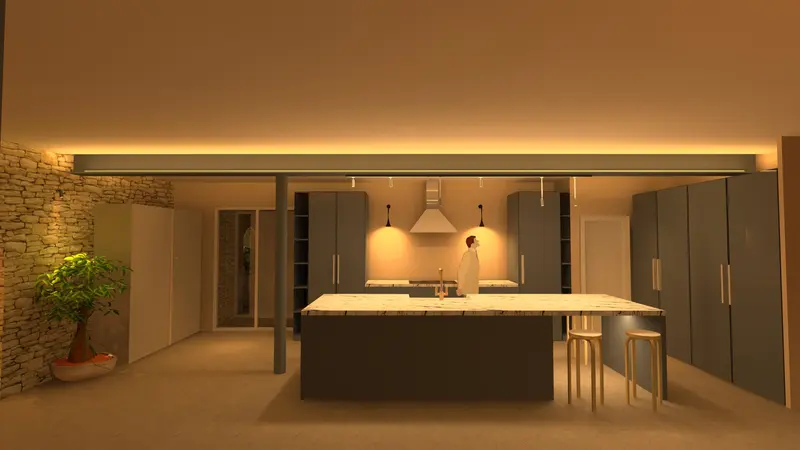
| Kitchen | 3000–4000 K on the worktop | Seeing accurately while cooking |
| Bathroom | 3000–4000 K at the mirror | Seeing your complexion without making it look harsh |
| Office | 4000 K | Concentration |
| Hallway, staircase | 3000 K | Continuity with the living areas |
| Outdoors | 2700–3000 K, up to 4000 K on foliage | Brings out stone and wood, keeps greens vivid |
| Shop, showroom | 3000–4000 K depending on the products | Accurate colours above all |
CRI, the other figure to check
The colour rendering index (CRI, or Ra) measures, out of 100, how faithfully colours appear under a light. With a low CRI, colours look dull, faces look greyish and wood looks lifeless.
- CRI 80: the minimum indoors, enough for hallways, garages and offices.
- CRI 90 and above: recommended for the living room, kitchen, bathroom, dressing room and shops.
Reds are the first colours to suffer from poor rendering: a good LED sometimes also states its R9 value, which measures reds specifically.
Mixing temperatures without a false note
Within one room, keep a single temperature for the sources that are seen together: a 4000 K spotlight next to a 2700 K pendant feels like a building site. Two distinct zones, on the other hand, can each have their own, such as a worktop at 4000 K and a dining table at 2700 K.
Buy all the light sources for one space at the same time, from the same brand and the same range: two “3000 K” LEDs from different brands do not always have exactly the same tint.


LEDs with adjustable colour temperature
Some LEDs, known as CCT or “tunable white”, let you choose the colour temperature: whiter for working, warmer in the evening. This is the case with the “CCT” modules of our magnetic track lighting. Others, known as “dim to warm”, become warmer as you lower the intensity, like a filament bulb.
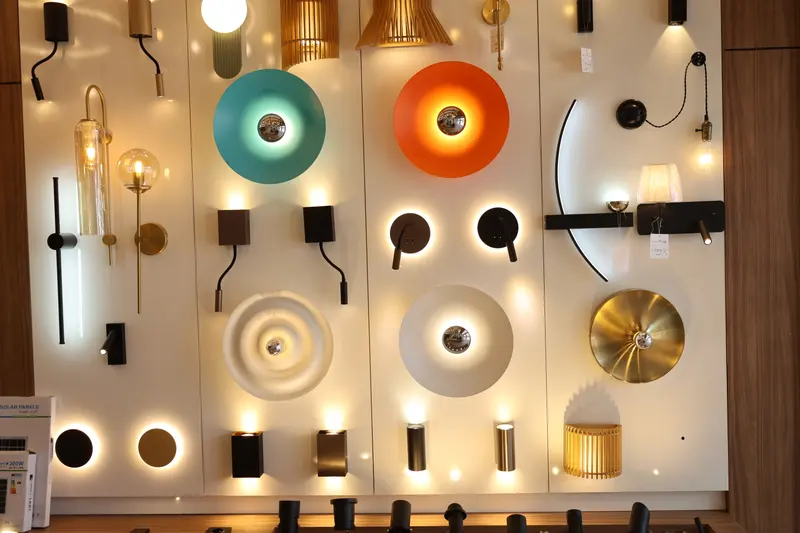
The safest approach is still to see the light for real: at the Marrakech showroom, ask to see the fittings switched on so you can compare colour temperatures.
- 2700–3000 K in the living areas, 4000 K for working.
- A CRI of at least 90 where colours matter.
- A single temperature for each space seen at a glance.
- All the light sources for a room bought together.
Products in this article
Open a product page for the details and the price, or add it to your cart. Delivery anywhere in Morocco.
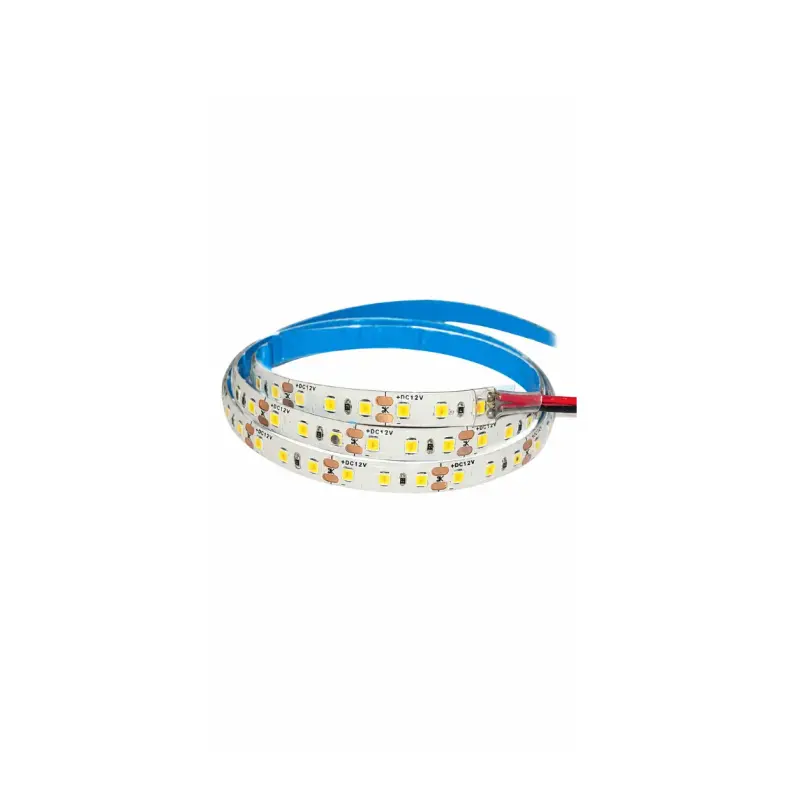
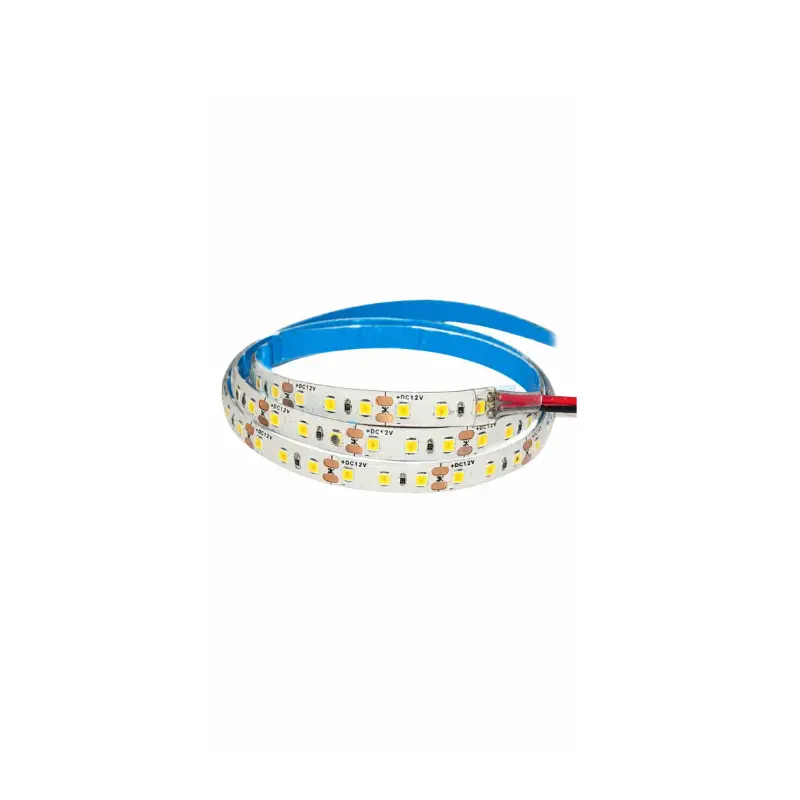
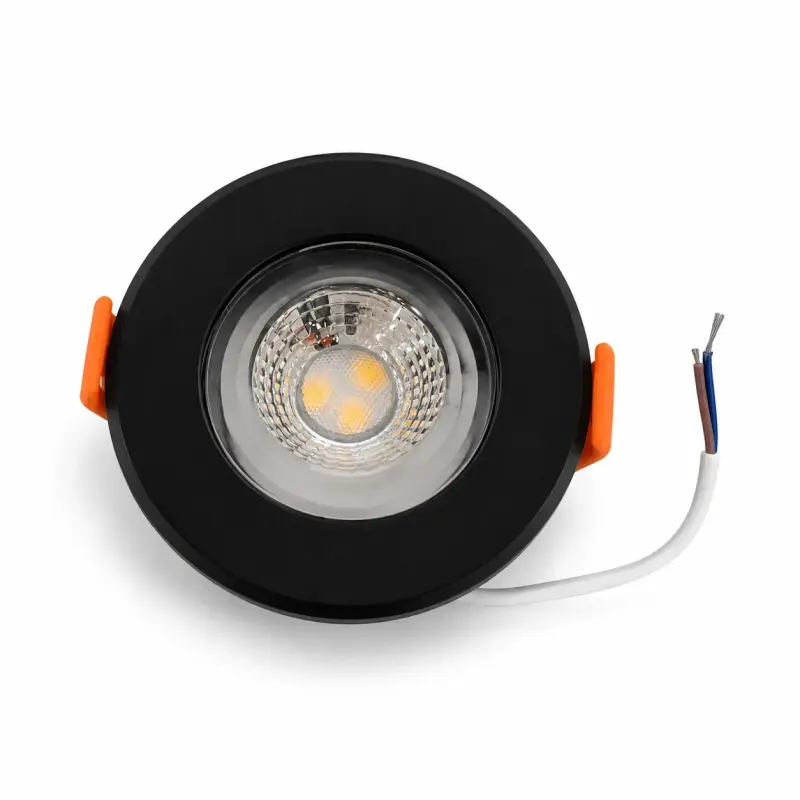
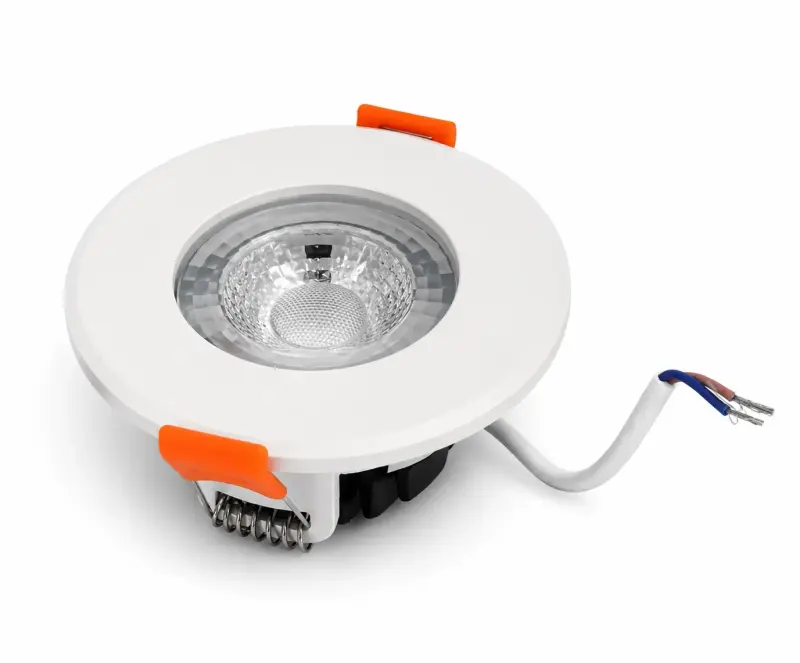
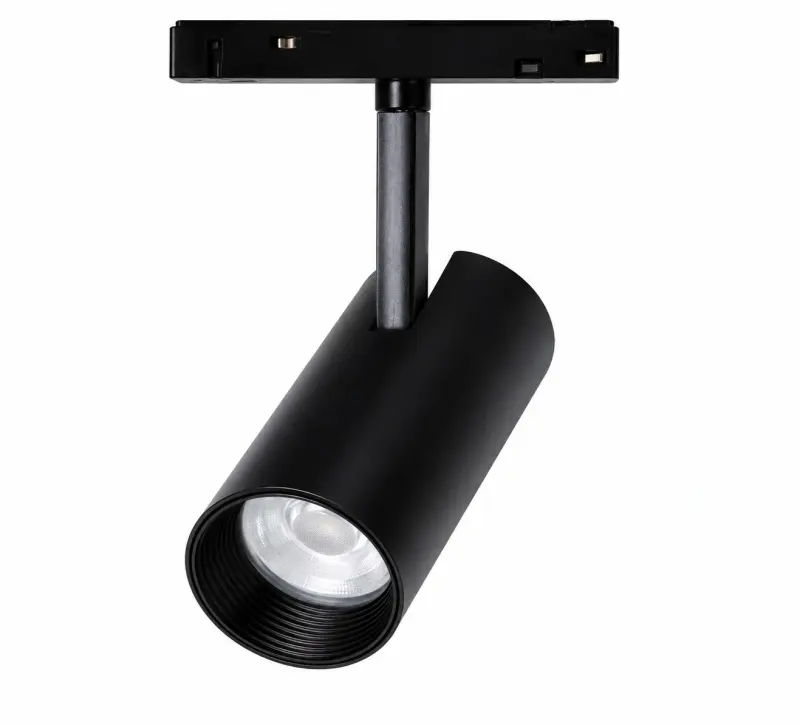
See the full range: LED stripsSpotlights & downlightsMagnetic track lighting
Frequently asked questions
2700 K or 3000 K for a living room?
Both work. 2700 K is more intimate, 3000 K a little crisper and more modern. Stick to the same value throughout the room.
Which temperature for a kitchen?
3000–4000 K on the worktop to see accurately, and warmer light above the table.
What is CRI?
The colour rendering index, out of 100. Aim for at least 80 everywhere and 90 or more in the living room, kitchen and bathroom.