LED strip: getting indirect lighting right
COB or SMD, 12 V, 24 V or 220 V, aluminium profile, driver, cove or under-cabinet installation: everything you need for soft indirect light with no visible dots.
In this article
Choosing the right strip
An LED strip is chosen according to four criteria: the type of LED, the voltage, the power and the protection rating.
| Type | Appearance | Where to use it |
|---|---|---|
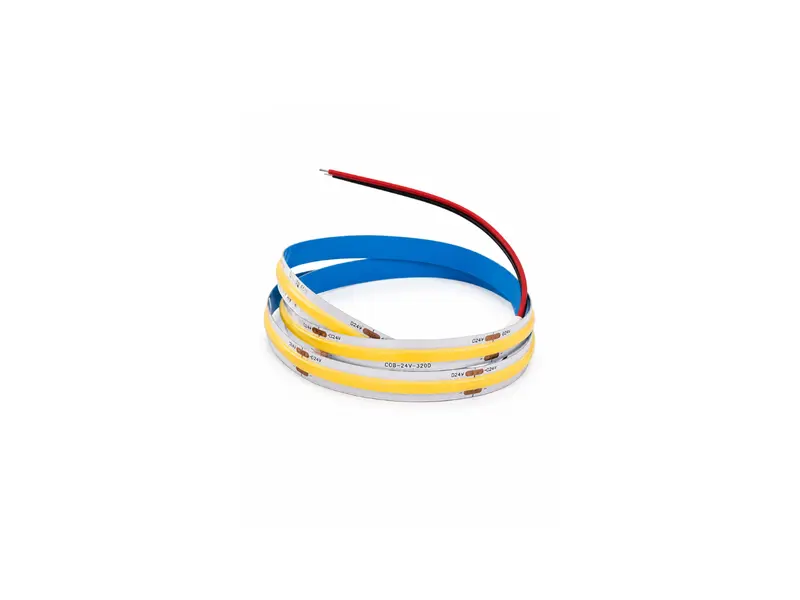
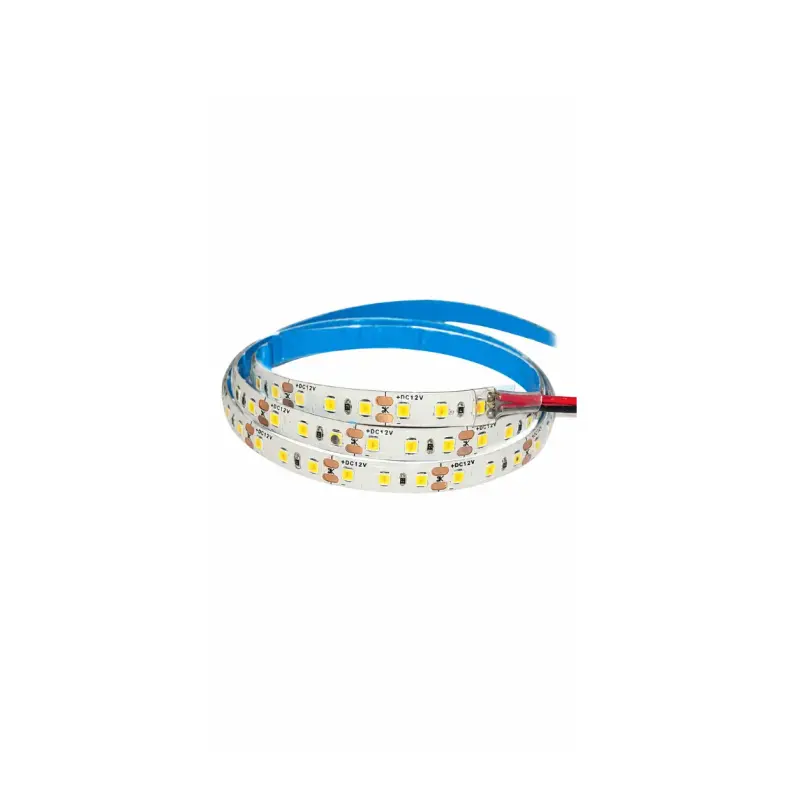
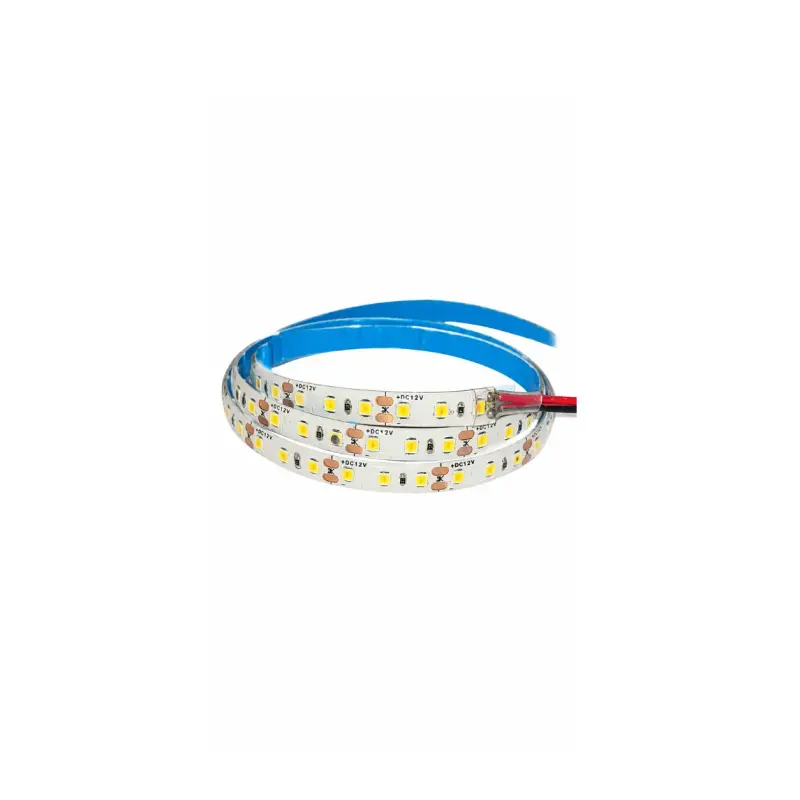
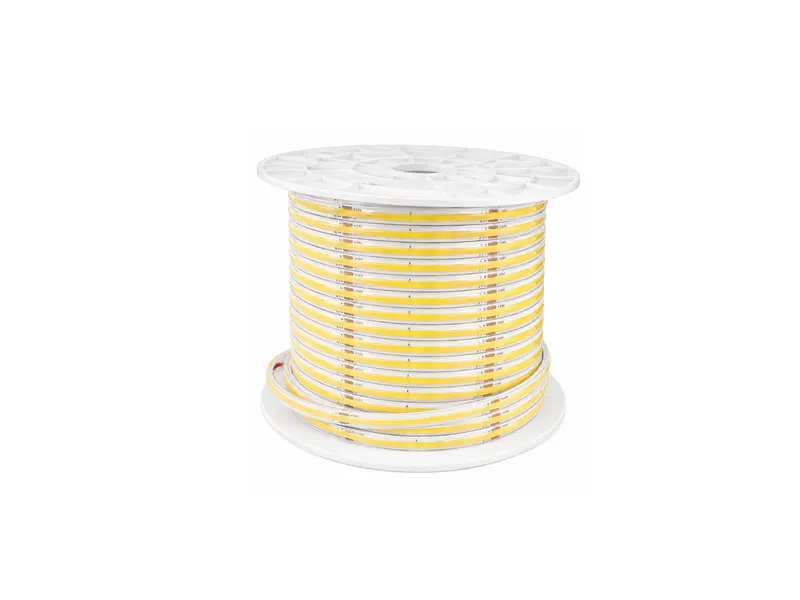
| COB | Continuous line of light, with no visible dots | Coves, shelves, anywhere the strip may be seen |
| SMD (2835, 3535, 5050…) | Distinct points of light | In an aluminium profile with a diffuser, or hidden |
| 220 V on a reel | Long runs without a separate power supply | Long linear runs, sheltered outdoor areas, installation by a professional |
- 12 V or 24 V: the most common indoors, used with a driver. 24 V allows longer runs before the light fades at the end of the strip.
- Power: about 4–8 W per metre for ambient light, 10–14 W per metre for a cove or worktop lighting.
- Protection: IP20 in a dry room, IP44 to IP65 in a bathroom, an exposed kitchen area or outdoors under cover.
- Colour: 2700–3000 K for ambience, 3000–4000 K for the kitchen or a dressing room, and a CRI of 90 if possible.
Sizing the driver
A 12 V or 24 V strip connects to a power supply (driver) whose wattage is calculated as follows: strip wattage per metre × length × 1.2 (a 20% margin).
Example: 8 m of strip at 12 W/m = 96 W, or about 115 W with the margin: choose a driver of 120 W or more.
Over long runs, the voltage drops along the strip and the far end becomes dimmer or more yellow. Feed the strip from both ends, or roughly every 5 m at 12 V and roughly every 10 m at 24 V.
The aluminium profile: finish, diffusion, lifespan
An aluminium profile with an opal diffuser makes all the difference: it hides the LED dots, protects the strip from dust and draws away heat, which extends its lifespan. Profiles come in stick-on, plaster-recessed and corner versions.
With a COB strip, the line is already continuous: the profile is still useful for the finish and for heat, but a thinner diffuser is enough.
Installations that work
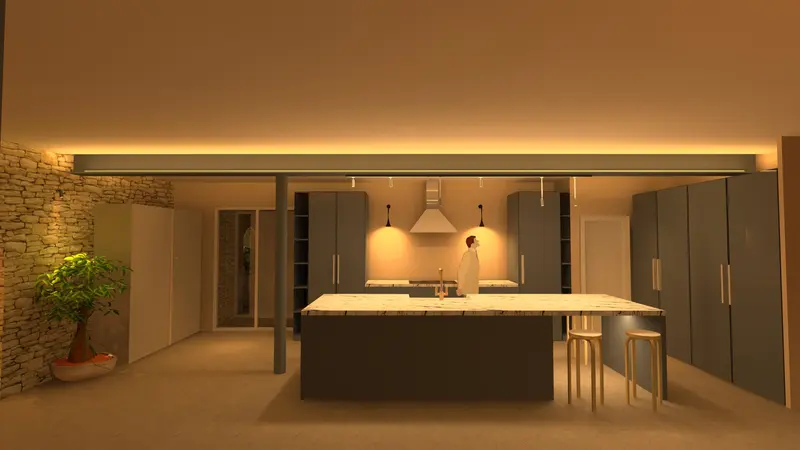
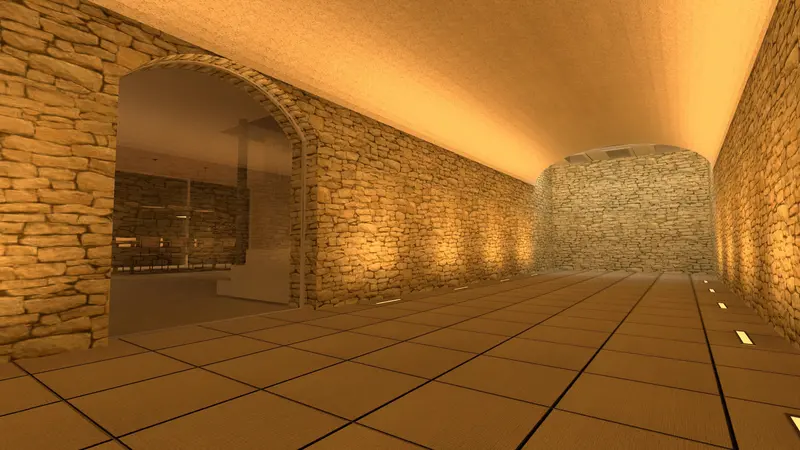
- Cove (light trough): the strip is hidden in a cove and lights the ceiling. Leave at least ten centimetres or so between the strip and the ceiling for a soft gradient, with no bright line.
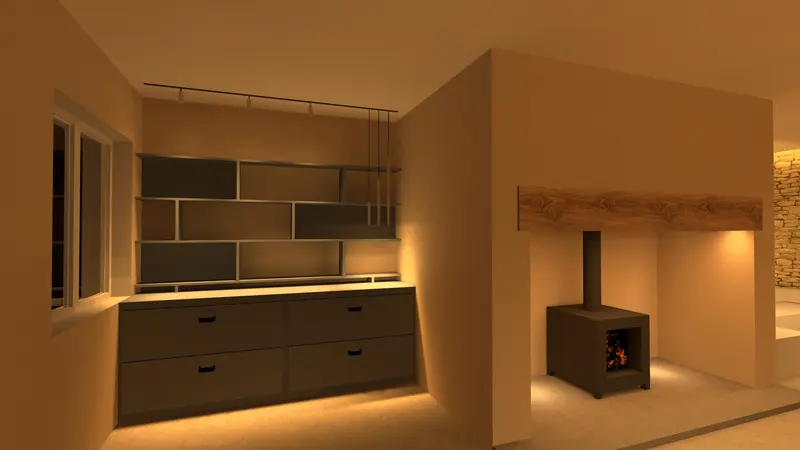
- Under kitchen wall cabinets: towards the front of the cabinet, to light the whole worktop without glare.
- Shelves and niches: under each shelf, in an aluminium profile, with warm light.
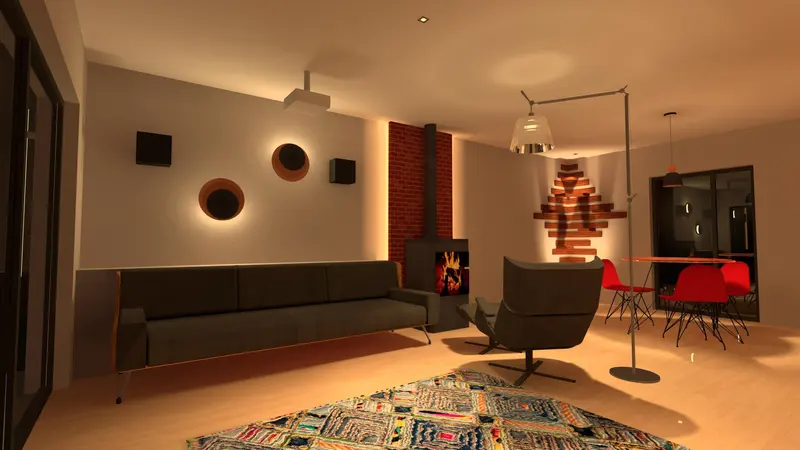
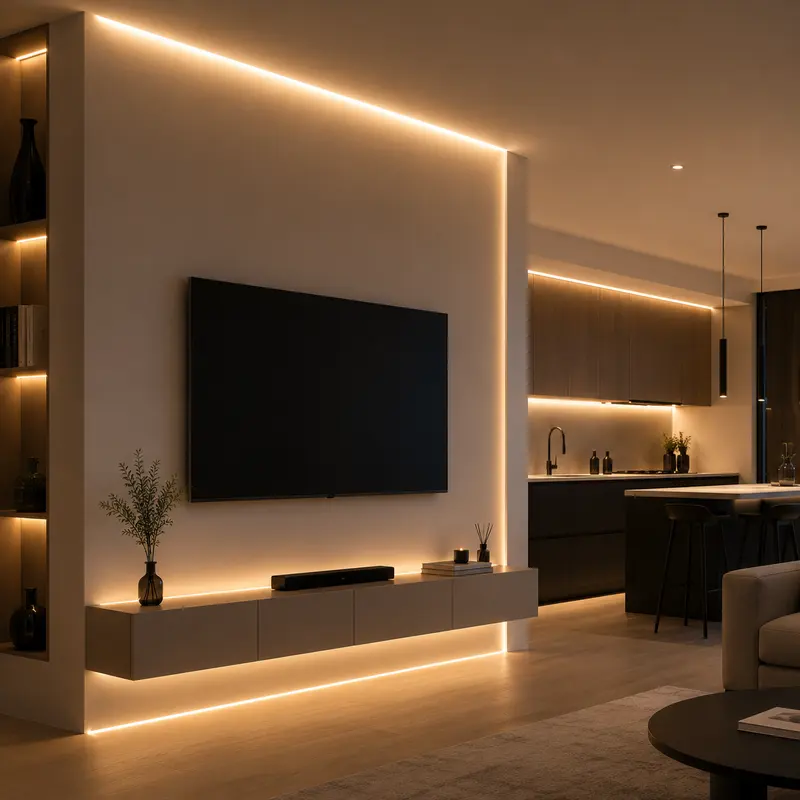
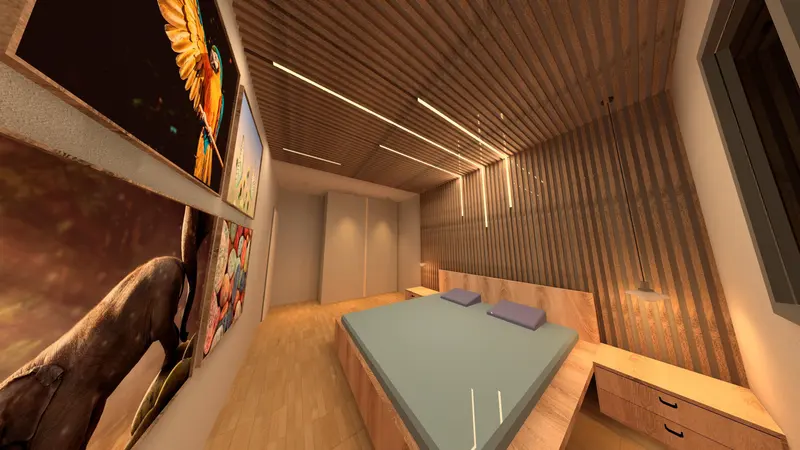
- Headboard and TV unit: behind them, for a halo on the wall.
- Steps and skirting: under the stair nosing or at the bottom of the wall, as night-time guide lighting.
Installation, step by step
- Switch off the power at the consumer unit before any work; connecting the driver to the 220 V mains is a job for an electrician.
- Cut the strip only at the marks shown on it (small scissors or lines).
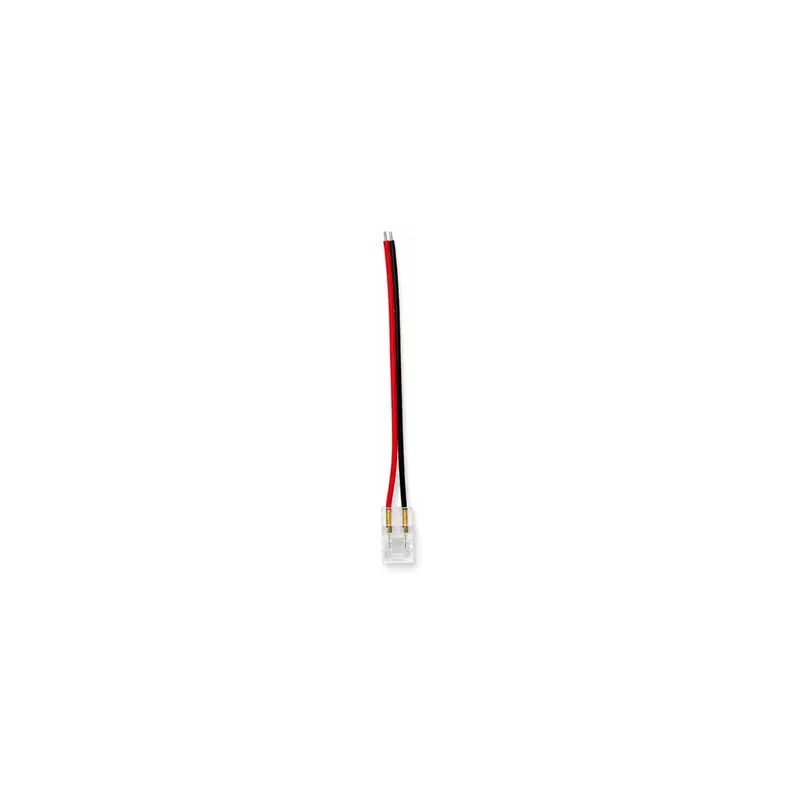
- Join sections with connectors suited to the width and type of strip, or by soldering.
- Clean and degrease the surface before sticking the strip down, preferably inside the aluminium profile.
- Respect the polarity (+ and −) and test before closing up.
- Avoid tight bends: use a corner connector rather than folding the strip.
A 220 V strip is connected directly to the mains: every badly insulated cut or connection is dangerous. Never cut or handle it while it is plugged in; have it installed by an electrician, on a circuit protected by a 30 mA RCD, with the manufacturer’s end caps and power cords.
- The right type: COB if the strip may be seen.
- A driver sized with a 20% margin.
- An aluminium profile and a diffuser.
- An accessible, ventilated driver.
- A suitable IP rating in damp rooms and outdoors.
Products in this article
Open a product page for the details and the price, or add it to your cart. Delivery anywhere in Morocco.
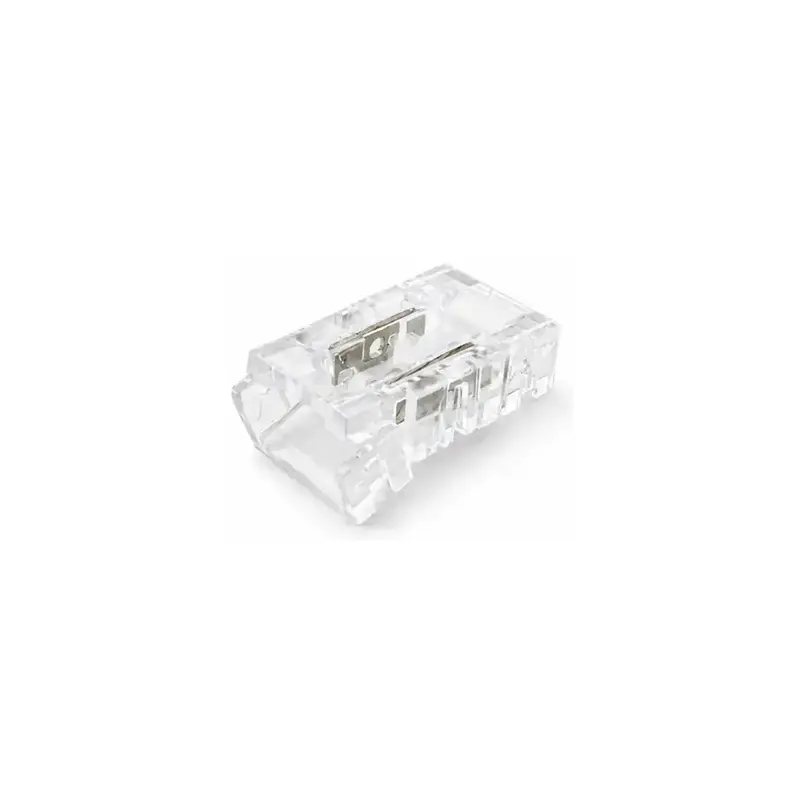
See the full range: LED strips
Frequently asked questions
COB or SMD strip?
COB if the strip can be seen or reflected: the line of light is continuous. SMD in an aluminium profile with a diffuser, or if it is completely hidden.
12 V or 24 V?
24 V allows longer runs without the light dropping at the end of the strip. 12 V suits short lengths.
How do I avoid visible light dots?
Use a COB strip, or an SMD strip in an aluminium profile with an opal diffuser, and aim the light at a pale surface rather than towards the eyes.