Lighting your office well for greater productivity
How many lux, what colour, where to place the light in relation to the screen and the window: the rules for a comfortable office, at home or at work.
In this article
How much light do you need to work?
For reading, writing and screen work, the European standard for workplaces (EN 12464-1) sets 500 lux on the work surface. Around the workstation the light can be lower, but not too low: a brightly lit desk in a dark room tires the eyes, which have to keep readjusting.
| Area | Recommended level |
|---|---|
| Work surface (reading, writing, screen) | 500 lux |
| Around the workstation | About 300 lux |
| Meeting room | 500 lux, adjustable |
| Corridors and circulation areas | About 100 lux |
Neutral, glare-free light
For concentration, neutral white light, around 4000 K, is the most widely used: it stays crisp without feeling cold. Keep 3000 K for relaxation areas or for a home office that is also used in the evening.
Glare is the number one enemy of comfort. Choose fittings whose light source is not directly visible (diffuser, louvre, optic): in offices, the aim is a glare rating of UGR 19 or less. A CRI (Ra) of at least 80 is enough for office work.
Positioning the desk in relation to the window and the screen
- The window to the side, never behind you (reflections on the screen) nor in front of you (glare).
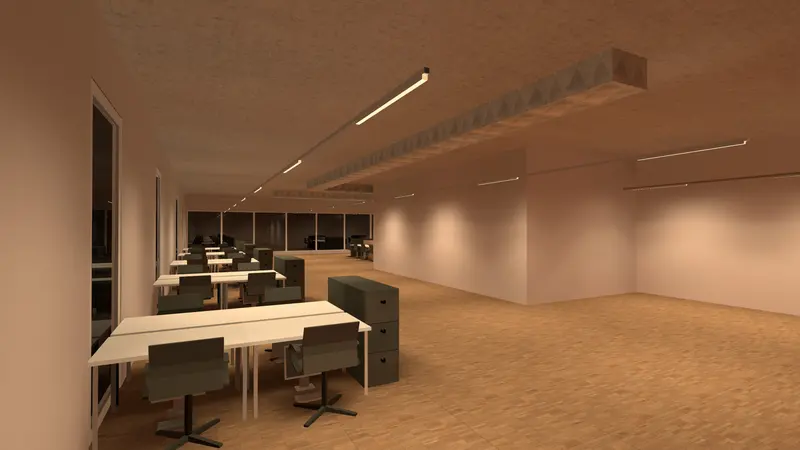
- Ceiling fittings parallel to the window and on either side of the workstation, rather than directly above or behind the person.
- The desk lamp on the side opposite your writing hand: on the left for a right-hander, on the right for a left-hander, so you are not writing in your own shadow.
The home office
At home, combine general lighting (spotlights, track, ceiling light) with an adjustable task lamp on the desk. Also light the wall behind the screen, or the shelves, with soft light: a background that is too dark behind a bright screen quickly tires the eyes.
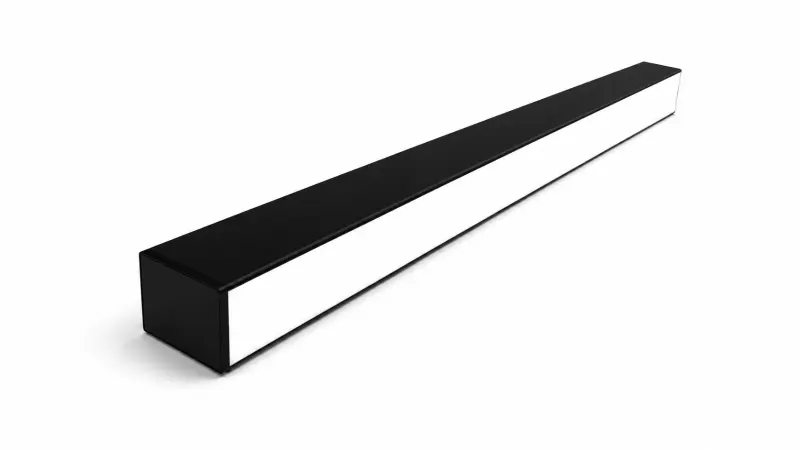
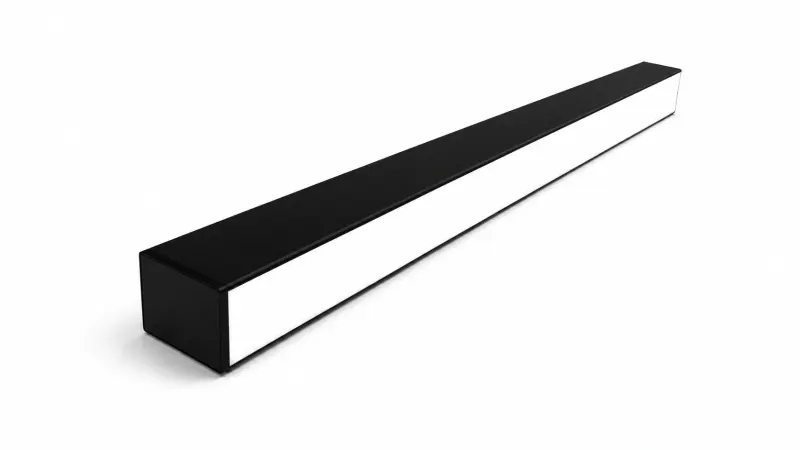
A magnetic track above the desk is a flexible solution: a linear module for the work surface and one or two laser modules from the same range for the bookcase, all of which can be moved if you rearrange the room.
Professional offices and open-plan spaces
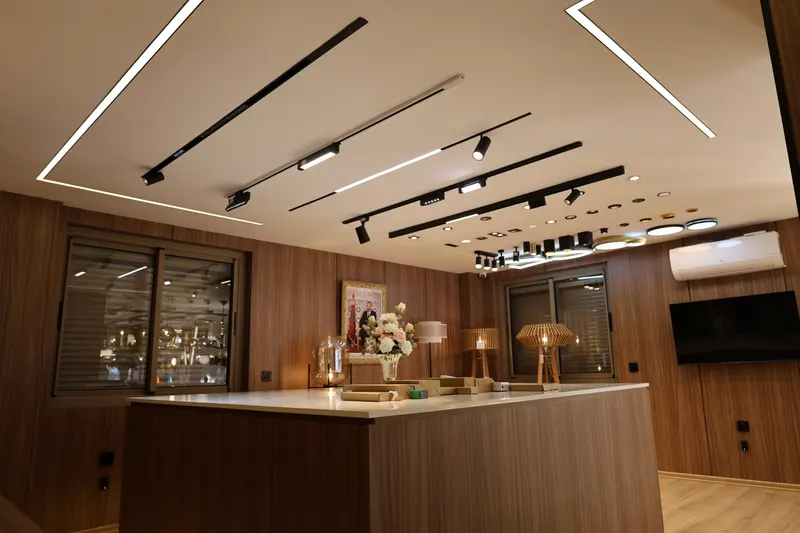
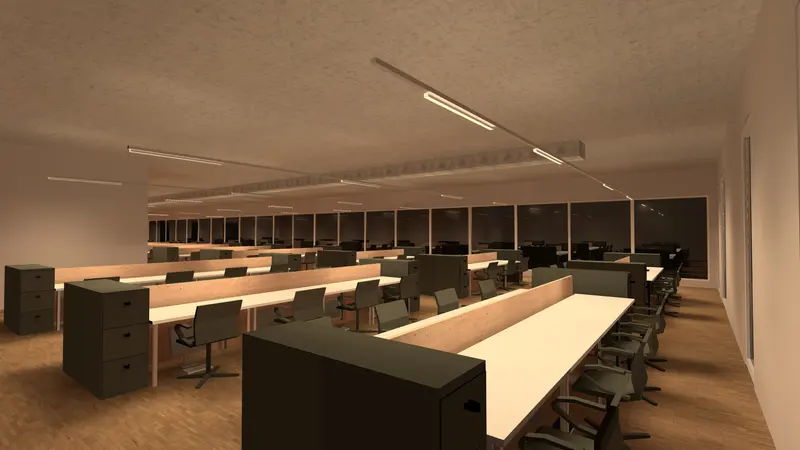
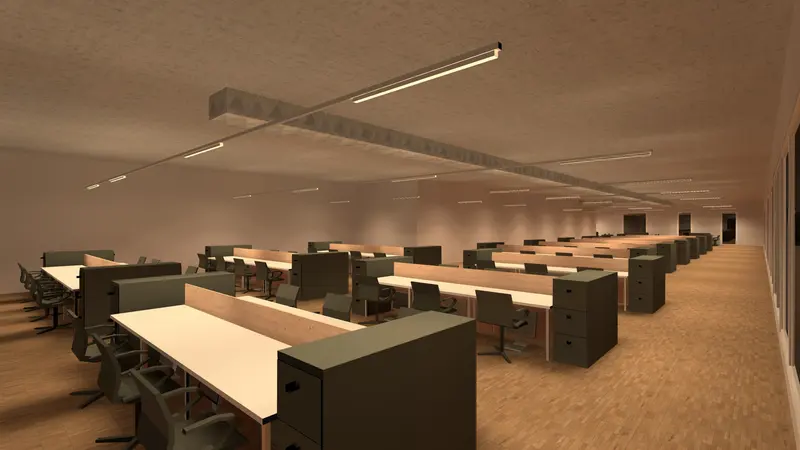
On an office floor, lines of fittings aligned with the desks give even light. Presence and daylight sensors dim or switch off the rows near the windows when there is enough sunlight: the energy saving is real, with no loss of comfort.
For an office project, a DIALux lighting study calculates the light levels and glare before the works begin: it is a service we offer. See our projects or book a consultation.
- 500 lux on the work surface.
- About 4000 K and a CRI (Ra) of at least 80.
- Fittings with no visible light source (UGR 19 or less).
- The window to the side of the workstation.
- An adjustable lamp or module for detailed work.
Products in this article
Open a product page for the details and the price, or add it to your cart. Delivery anywhere in Morocco.
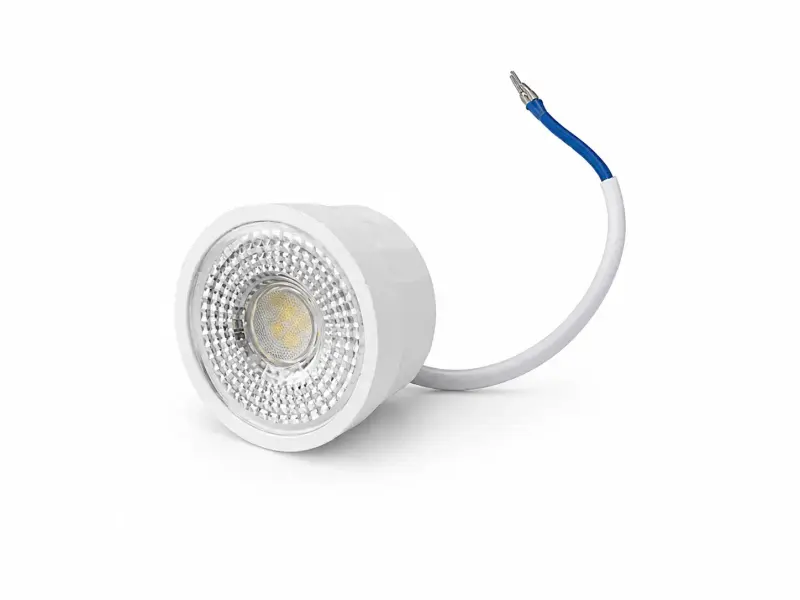
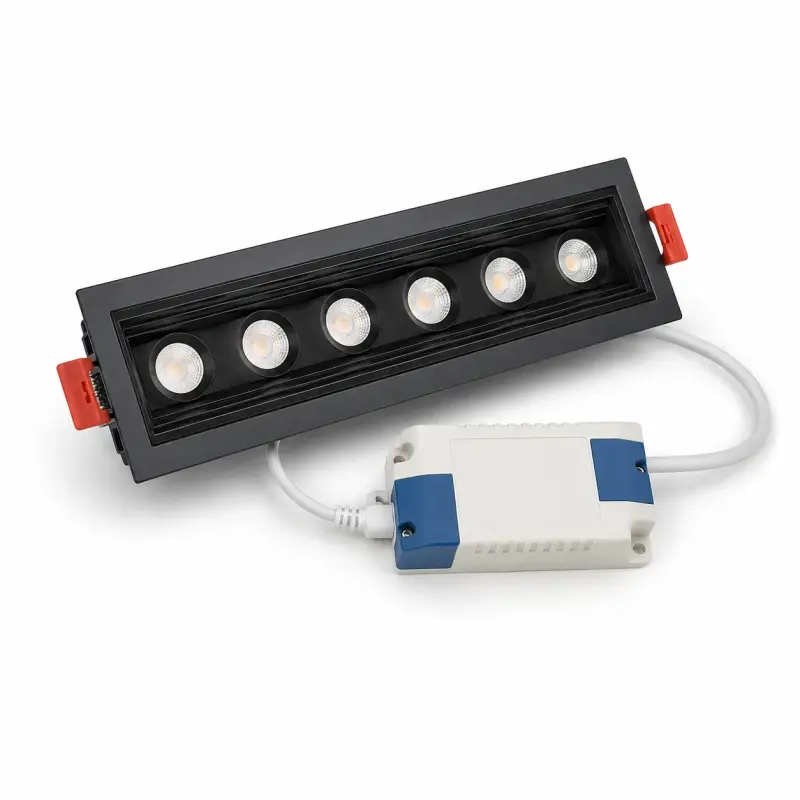
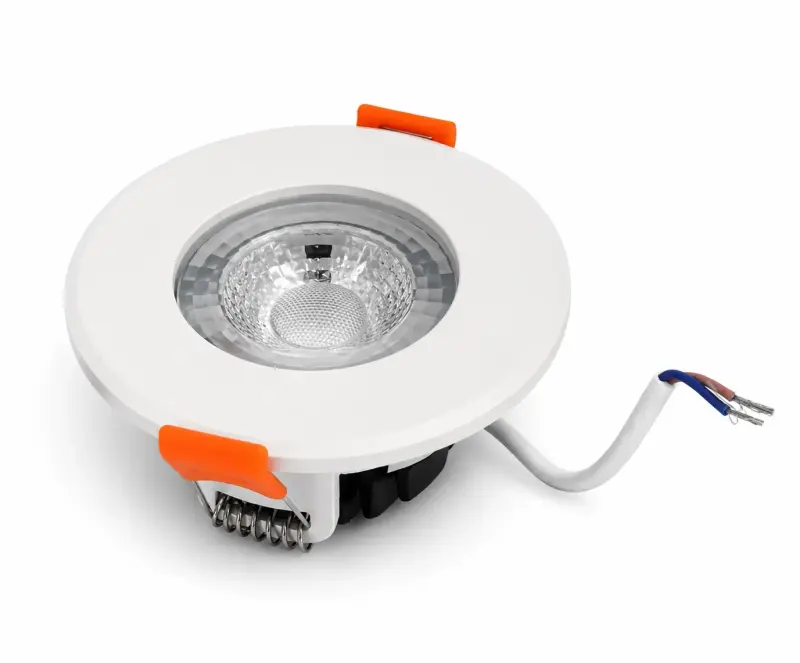
See the full range: Magnetic track lightingSpotlights & downlights
Frequently asked questions
How many lux does an office need?
500 lux on the work surface for reading, writing and screen work, according to the EN 12464-1 standard.
What colour of light is best for working?
A neutral white around 4000 K helps concentration. Keep 3000 K for relaxation areas.
How do you avoid reflections on the screen?
Position the desk so that the window is to the side, with the light fittings on either side of you rather than directly behind you.